
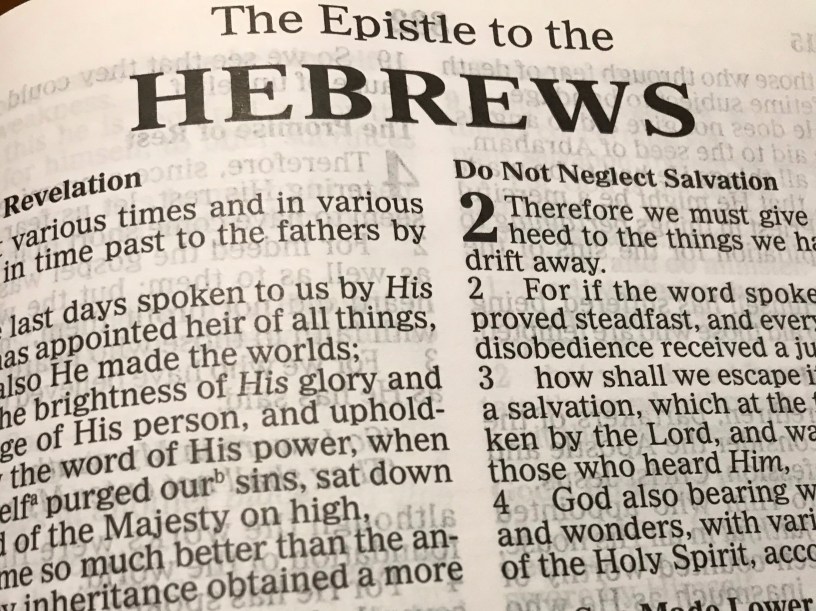
In previous parts of our study we saw that God is speaking to us “by His Son,” appointed Him “heir of all things,” and through Him also “made the worlds.” Jesus truly is Greater.
We saw that Jesus Christ is the “brightness” of God’s glory and the “express image” of His person. Jesus truly is Greater.
We saw that Jesus “purged our sins” and sat down at “the right hand of the Majesty on high.” Jesus truly is Greater.
What about the powerful angels of Heaven? Is Jesus greater than them?
Greater Than Angels
having become so much better than the angels, as He has by inheritance obtained a more excellent name than they. Hebrews 1:4
People have been fascinated with angels for thousands of years. Many ancient people worshipped angelic beings as gods. Jews, to whom Hebrews was written, were very familiar with angels and had much reverence for them and their work.
Angels played a major role in Hebrew history (e.g. Abraham, Isaac, Jacob, Moses, Daniel, Ezekiel). Jews knew what the Bible said about angelic intervention in delivering them from their enemies. They knew the place angels played in the giving of the Law (Psalm 68:17; Acts 7:53), the cherubim who covered the Mercy Seat with their wings, the angels Michael and Gabriel who protected and guided Israel, and the many other ways angels played a significant role in the life of God’s people.
It is in that background that the writer to Hebrews points to the fact that Jesus Christ is “so much better” than the angels. As great as angels were and are, Jesus is better. The Greek word for “better” is kreittōn and means “superior, greater, stronger, more excellent.” It carries the idea of dominance. As powerful as the angels are, Christ is dominant.
The words “having become” is a translation of the Greek word genomenos. It is a verb in the aorist tense.
Not only is Jesus “better” than the angels, He has a “more excellent” name. He obtained that “by inheritance.” The author chose the word diaphorōteron to describe Christ’s name. It means “excellent, varying, differing.” The name of Jesus Christ is “different” than the names of the angels. His name is “more excellent.” The word is used in a comparative sense.
The Greek word translated “inheritance” is keklēronomēken and means “to inherit, obtain by inheritance.” The question is when did Jesus inherit the name? One thought is that it is His eternal inheritance as the Son of God. That is the context of Hebrews 1:1-3.
… has in these last days spoken to us by His Son, whom He has appointed heir of all things, through whom also He made the worlds.
However, there are some who think the “name” referred to in verse 4 comes from His being the heir of the promise God made to King David concerning his household having an everlasting kingdom. We’ll share a bit more about that in a few minutes.
Angel of the Lord
Interestingly, the Son of God is portrayed in the Old Testament at times (pre-incarnate) as the Angel of the Lord (e.g. Genesis 16:7-12; 22:11-18; Exodus 3:2; Judges 2:1-4). In Genesis 18 we see the Lord and two of His angels appear to Abraham as men. This is an example of a theophany, a physical appearance of God to humans. While the Lord stayed and spoke with Abraham, the other two “men” went to Sodom and Gomorrah and destroyed it. We know from Genesis 19 that the two men were angels. There are other examples of theophanies in the Old Testament, including in Genesis chapters 12 and 32.
Then Jacob was left alone; and a Man wrestled with him until the breaking of day … Then Jacob asked, saying, ‘Tell me Your name, I pray.’ And He said, ‘Why is it that you ask about My name?’ And He blessed him there. So Jacob called the name of the place Peniel: ‘For I have seen God face to face, and my life is preserved.’
The Hebrew words for “Angel of the Lord” are mal’aḵ Yahweh. The Hebrew word mal’aḵ and Greek word angelōn mean the same thing – “messenger.” The pre-incarnate Son of God did the will of His Father, just as the Incarnate Son of God did. That included delivering divine messages to God’s people. However, Jesus as the Angel of the Lord delivered those messages with Divine Authority. He was and is God. No angel can claim to be God.
The Exalted Son
For to which of the angels did He ever say: ‘You are My Son, Today I have begotten You’? And again: ‘I will be to Him a Father, And He shall be to Me a Son’? But when He again brings the firstborn into the world, He says: ‘Let all the angels of God worship Him.’ Hebrews 1:5-6
The author of Hebrews continued his theme by asking an important question about position and purpose. Jesus Christ holds the position of the Son of God. God is a Father to Him, and He is a Son to His Father. That is a positional relationship that none of the angels could claim to have with God.
Verse 5 is a quote from Psalm 2:7. Psalm 2 is a Messianic Psalm written by King David about God’s Anointed who would come to rule the nations.
I will declare the decree: The Lord has said to Me, ‘You are My Son, Today I have begotten You. Ask of Me, and I will give You The nations for Your inheritance, And the ends of the earth for Your possession. You shall break them with a rod of iron; You shall dash them to pieces like a potter’s vessel.’
Positionally, we know that Jesus Christ is the Son of God. What about purpose? Hebrews 1:5 and Psalm 2:7 use the word “begotten.” The Hebrew word yəliḏ and the Greek word gennaó can be understood in a few ways. One is the idea of fathering a child in the sense of “begetting.” Another is of “bringing forth,” and another is of being “unique, one of a kind.”
So, how should we understand the meaning in Hebrews 1:5? The Apostle Paul also quoted from Psalm 2:7 when he spoke to Jews in the synagogue at Antioch in Pisidia. We find in Paul’s presentation important insight into how we should understand Hebrews 1:5.
Men and brethren, sons of the family of Abraham, and those among you who fear God, to you the word of this salvation has been sent. For those who dwell in Jerusalem, and their rulers, because they did not know Him, nor even the voices of the Prophets which are read every Sabbath, have fulfilled them in condemning Him. And though they found no cause for death in Him, they asked Pilate that He should be put to death. Now when they had fulfilled all that was written concerning Him, they took Him down from the tree and laid Him in a tomb. But God raised Him from the dead. He was seen for many days by those who came up with Him from Galilee to Jerusalem, who are His witnesses to the people. And we declare to you glad tidings—that promise which was made to the fathers. God has fulfilled this for us their children, in that He has raised up Jesus. As it is also written in the second Psalm: ‘You are My Son, Today I have begotten You.’ And that He raised Him from the dead, no more to return to corruption, He has spoken thus: ‘I will give you the sure mercies of David.’ Therefore He also says in another Psalm: ‘You will not allow Your Holy One to see corruption.’ ‘For David, after he had served his own generation by the will of God, fell asleep, was buried with his fathers, and saw corruption; but He whom God raised up saw no corruption. Acts 13:26-37
Paul connected Psalm 2:7 to the resurrection of Jesus Christ. Jesus is “one of a kind.” He even called Himself God’s “only begotten Son” in John 3:16. Translators often use the English words “one and only Son” to help readers understand the word monogenē (one and only, only one of its kind, unique). Jesus Christ, the Son of God, is the only One who died for the sins of the world, rose from the dead, and ascended to Heaven to reign and rule as “highly exalted” with the “name that is above every name.”
Have this mind among yourselves, which is yours in Christ Jesus, who, though he was in the form of God, did not count equality with God a thing to be grasped, but emptied himself, by taking the form of a servant, being born in the likeness of men. And being found in human form, he humbled himself by becoming obedient to the point of death, even death on a cross. Therefore God has highly exalted him and bestowed on him the name that is above every name, so that at the name of Jesus every knee should bow, in heaven and on earth and under the earth, and every tongue confess that Jesus Christ is Lord, to the glory of God the Father. Philippians :5-11
The Worshipped Son
Hebrews 1:6 says, “Let all the angels of God worship Him.” That comes most likely from Psalm 97:7 –
Let all be put to shame who serve carved images, Who boast of idols. Worship Him, all you gods.
Angels were called “the sons of God” in the Book of Job (Job 1:6; 2:1; 38:7). We learn from Job that angels “shouted for joy” when God “laid the foundations of the earth.” We also learn from Job that angels “present themselves before the Lord” on a regular basis. We know from Psalm 103 that angels “excel in strength,” “do His word, Heeding the voice of His word,” and are “ministers of His, who do His pleasure.”
Satan and his angels do not worship God, but those angels who did not follow Satan in his rebellion worship God only.
Then I looked, and I heard the voice of many angels around the throne, the living creatures, and the elders; and the number of them was ten thousand times ten thousand, and thousands of thousands, saying with a loud voice: ‘Worthy is the Lamb who was slain To receive power and riches and wisdom, And strength and honor and glory and blessing! Revelation 5:11-12
All the angels stood around the throne and the elders and the four living creatures, and fell on their faces before the throne and worshiped God, saying: ‘Amen! Blessing and glory and wisdom, Thanksgiving and honor and power and might, Be to our God forever and ever. Amen.
Then he said to me, ‘Write: ‘Blessed are those who are called to the marriage supper of the Lamb!’ And he said to me, ‘These are the true sayings of God.’ And I fell at his feet to worship him. But he said to me, ‘See that you do not do that! I am your fellow servant, and of your brethren who have the testimony of Jesus. Worship God! For the testimony of Jesus is the spirit of prophecy. Revelation 19:9-10
Next Time
We will look at more comparisons between Jesus and angels in the next part of our series, Hebrews: Christ Is Greater.
Scripture taken from the New King James Version®. Copyright © 1982 by Thomas Nelson. Used by permission. All rights reserved.
GraceLife © 1990-2025

 GraceLife Blog